
Conduct Hearing in Ontario: A Complete Guide for Regulated Professionals
Expert Legal Defense for Lawyers, Nurses, Doctors, Dentists, Realtors & Financial Professionals
Get Expert Tribunal Defense Today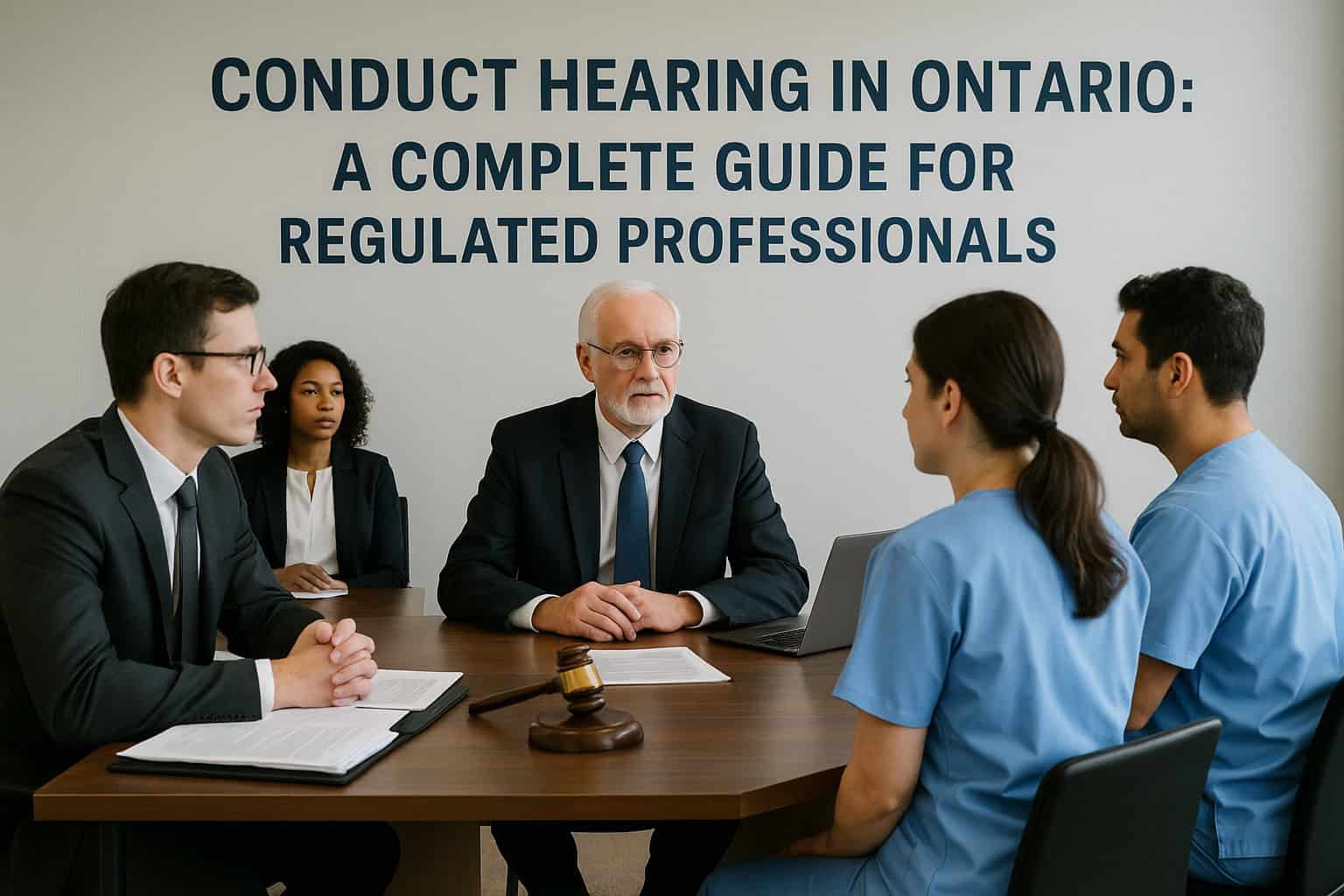
In Ontario, thousands of professionals work under strict regulatory frameworks designed to maintain public trust. From lawyers and nurses to doctors, dentists, real estate agents, and financial advisors, every professional is expected to uphold rigorous ethical and legal standards. When these standards are questioned or allegedly breached, a conduct hearing becomes the formal mechanism that determines your professional future.
Unlike criminal proceedings, professional conduct hearings operate under a different standard of proof and carry consequences that can be equally devastating to your career and financial security. A single adverse finding can result in license suspension, heavy fines, practice restrictions, or permanent revocation—destroying years of education, training, and career building in a matter of hours.
What Is a Conduct Hearing?
A conduct hearing is a formal tribunal-style proceeding where allegations of professional misconduct, incompetence, or ethical violations are adjudicated. While not a criminal trial, these hearings follow structured legal procedures with serious consequences that can permanently alter your professional trajectory.
The Role of Professional Regulatory Bodies
Each regulatory body in Ontario acts as both investigator and enforcer of professional standards. Their mandate is explicit: public protection takes precedence over professional interests. This fundamental principle means that regulatory bodies approach complaints with an inherent bias toward protecting the public, even when allegations are unsubstantiated or exaggerated.
Common Triggers for Conduct Hearings
- Breach of ethical obligations or professional codes of conduct
- Fraud, dishonesty, or misrepresentation in professional dealings
- Professional incompetence or failure to meet practice standards
- Sexual misconduct or boundary violations with clients or patients
- Criminal charges or convictions affecting professional reputation
- Financial misconduct including trust account violations
- Failure to meet continuing education or licensing requirements
- Substance abuse issues affecting professional performance
Regulatory Bodies Across Ontario's Professional Landscape
Law Society of Ontario (LSO)
Regulates: 50,000+ lawyers and paralegals
Common Issues: Trust account violations, client neglect, ethical breaches, criminal charges
Severe Penalties: Disbarment, license revocation, substantial fines
Public Impact: Decisions published online, permanent career damage
College of Nurses of Ontario (CNO)
Regulates: 180,000+ nurses and nurse practitioners
Common Issues: Patient care failures, boundary violations, drug diversion, record falsification
Severe Penalties: License suspension/revocation, practice restrictions
Career Impact: Inability to work in healthcare, reputation damage
College of Physicians and Surgeons of Ontario (CPSO)
Regulates: 40,000+ physicians and surgeons
Common Issues: Medical malpractice, sexual misconduct, prescribing violations, billing fraud
Severe Penalties: License revocation, practice restrictions, hospital privilege loss
Financial Impact: Loss of medical practice, malpractice insurance issues
Royal College of Dental Surgeons of Ontario (RCDSO)
Regulates: 11,000+ dentists and specialists
Common Issues: Billing irregularities, patient care standards, professional boundaries
Severe Penalties: License suspension, practice monitoring, substantial fines
Practice Impact: Loss of dental practice, insurance complications
Financial Services Regulatory Authority of Ontario (FSRA)
Regulates: Insurance agents, mortgage brokers, pension administrators
Common Issues: Misrepresentation, fraud, fiduciary breaches, unauthorized activities
Severe Penalties: Administrative monetary penalties up to $1 million, permanent industry bans
Industry Impact: Complete exclusion from financial services sector
Real Estate Council of Ontario (RECO)
Regulates: 75,000+ real estate professionals
Common Issues: Misrepresentation, conflict of interest, commission violations, trust account issues
Severe Penalties: Fines up to $50,000, license suspension/revocation
Career Impact: Inability to work in real estate, reputation damage in community
The Conduct Hearing Process: What Every Professional Must Know
Stage 1: Complaint and Initial Investigation
Complaints can originate from multiple sources: clients, patients, colleagues, employers, insurance companies, or the regulatory body itself. The investigation phase involves document requests, interviews, expert reviews, and fact-gathering that builds the foundation for any potential hearing.
Stage 2: Referral to Hearing
If the investigation reveals potential misconduct, the matter is referred to a formal hearing tribunal. This referral alone can trigger professional liability insurance issues, employment complications, and reputational damage even before any findings are made.
Stage 3: Pre-Hearing Preparation
This critical phase involves disclosure of evidence, witness preparation, expert reports, and strategic planning. The quality of preparation often determines the hearing outcome more than the underlying facts.
Stage 4: The Formal Hearing
Hearings are typically public proceedings conducted before a panel of adjudicators. Evidence is presented, witnesses testify under oath, and legal arguments are made. The proceedings are recorded and decisions are published, creating permanent public records.
Stage 5: Decision and Penalties
Hearing panels can impose a wide range of sanctions, from reprimands and fines to complete license revocation. Many decisions also include costs awards, requiring the professional to pay the regulatory body's legal and administrative expenses.
Rights of Professionals During Conduct Hearings
Right to Legal Representation
While not mandatory, legal representation is practically essential given the complexity of regulatory law and the severe consequences of adverse findings. Professional conduct hearings involve nuanced legal and procedural issues that require specialized expertise.
Right to Due Process
Professionals have the right to know the specific allegations, review all evidence, cross-examine witnesses, and present their own evidence and arguments. However, these rights are meaningless without competent legal counsel to exercise them effectively.
Right to Appeal
Most regulatory bodies provide limited appeal rights, typically restricted to questions of law or procedural fairness. Appeals are complex proceedings with strict deadlines and limited grounds for success.
Potential Career Impacts of Misconduct Findings
The consequences of adverse conduct hearing findings extend far beyond immediate penalties:
- Permanent Public Record: Decisions are published online and remain searchable indefinitely
- Professional Liability Insurance: Coverage may be denied or become prohibitively expensive
- Employment Opportunities: Many employers conduct regulatory background checks
- Cross-Jurisdictional Impact: Findings in Ontario may affect licensing in other provinces
- Financial Consequences: Loss of practice income, legal costs, penalty payments
- Personal Reputation: Community standing and personal relationships affected
- Future Licensing: Difficulty obtaining licenses in related professions
Frequently Asked Questions About Conduct Hearings
Yes, most professional conduct hearings are public proceedings to ensure transparency and maintain public confidence. This means anyone can attend and decisions are published online with your name and professional details.
Absolutely. For serious misconduct, regulatory bodies can and do revoke licenses permanently. Revocation typically means you can never practice in that profession again in Ontario, and may affect licensing opportunities in other jurisdictions.
While not legally required, attempting to represent yourself in a conduct hearing is extremely risky. The regulatory body will have experienced legal counsel, complex procedures must be followed, and the stakes are too high to proceed without expert representation.
The timeline varies significantly based on complexity, but can range from several months to multiple years. During this entire period, your professional standing and practice may be affected, making early resolution strategies crucial.
Penalties range from reprimands and fines to license suspension or permanent revocation. Many decisions also require payment of the regulatory body's legal costs, which can be substantial. All findings become part of your permanent professional record.
Why Choose We Defend You for Professional Conduct Hearings
35+ years of specialized experience defending regulated professionals across all major Ontario regulatory bodies
Cross-Regulatory Expertise
We defend professionals before the LSO, CNO, CPSO, RCDSO, FSRA, RECO, and other regulatory bodies. Our deep understanding of each regulator's unique procedures and precedents provides strategic advantages.
Strategic Defense Planning
Every conduct hearing requires a customized approach. We analyze the allegations, assess the evidence, identify procedural defenses, and develop comprehensive strategies focused on preserving your professional license.
Early Intervention Success
Many cases can be resolved favorably before reaching a formal hearing. Our early intervention strategies often result in complaint dismissals, reduced charges, or alternative resolutions that protect your career.
Reputation Protection
We understand that professional reputation is as valuable as your license. Our approach considers long-term career impact, public perception, and strategies to minimize reputational damage throughout the process.
Protect Your Professional License and Career
Don't face a conduct hearing alone. Our experienced team provides the strategic, aggressive representation needed to defend your professional license, reputation, and livelihood across all Ontario regulatory bodies.
Free Initial Consultation Available
Call us today to discuss your case and learn how we can help you navigate through the conduct hearing process with confidence.
Call Now for Urgent Consultation Email Our Professional Defense Team
Defending Regulated Professionals Across Ontario
Law Society of Ontario (LSO) • College of Nurses of Ontario (CNO) • College of Physicians and Surgeons of Ontario (CPSO)
Royal College of Dental Surgeons of Ontario (RCDSO) • Financial Services Regulatory Authority of Ontario (FSRA)
Real Estate Council of Ontario (RECO) • And All Other Professional Regulatory Bodies
Your professional license and reputation deserve expert defense